I’m a fixer, not a hot-rodder
I’ve always been interested in chainsaws. There’s a whole world of people who mess with them: porting and hot-rodding the engines, running huge bars, milling big lumber right where the tree fell. That’s not me.
I’m more of a fixer. I like taking something that doesn’t run, or that needs one small thing, and making it work again. Over the years I’d built up a small collection of lawn and yard equipment, and some of it had quietly stopped working. So I decided to fix it: a couple of gas weedeaters and an old chainsaw.
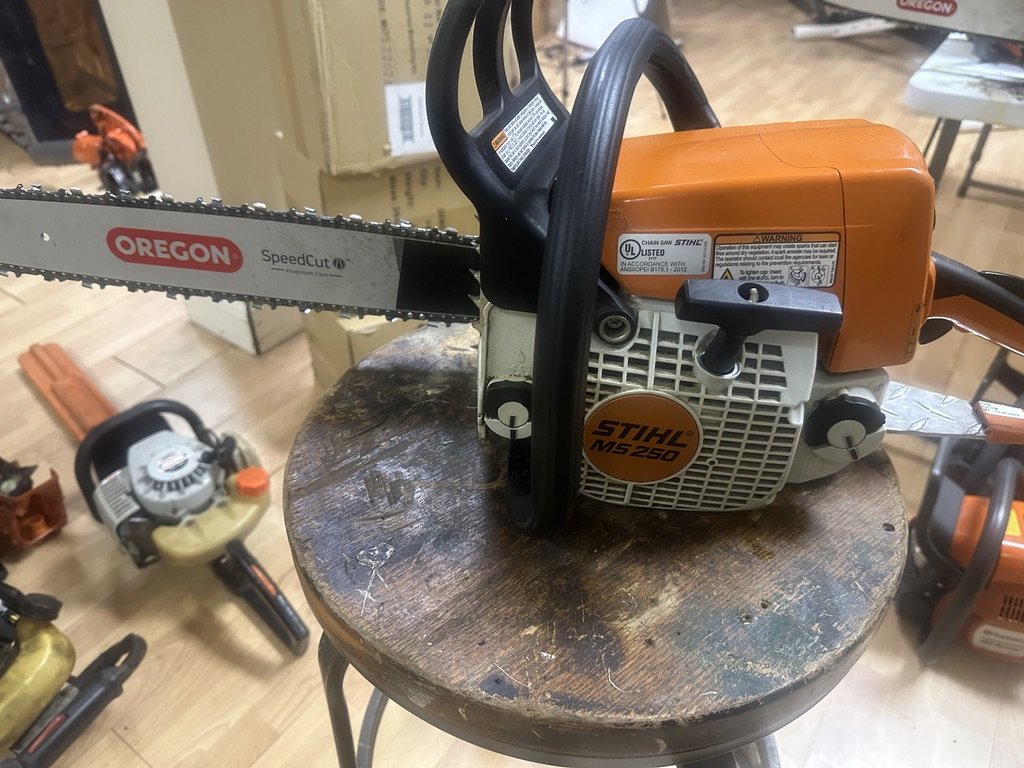
The saw I wanted: a Stihl MS250
While I was fixing my own stuff, I was also keeping an eye out for one particular saw: a Stihl MS250. I’d used a friend’s up at my buddy John’s cabin, and it was fantastic. Light, and it just cut. I wanted one.
The MS250 is surprisingly light for its power: 3.0 hp from a 45 cc engine, with a powerhead that weighs about 10 pounds. The catch is that they’re notoriously hard to start. It takes a strong arm to pull that high-compression engine over, and unlike Husqvarna saws, not every Stihl has a primer bulb to make starting easier.
The market speaks, though. The MS250 came out in 2002, and Stihl tried to replace it with the MS251. Customers still wanted the 250, so as of this writing you can still buy one new.
A $100 pile of dead equipment
Then I saw an ad: a bunch of lawn and garden equipment, none of it running, $100 for the lot. There were a couple of professional hedge shears, a small tiller, a couple of chainsaws, and an MS250. Five or six machines in all.
I brought them home and started tearing into them. It turned out most of what they needed was a carburetor rebuild and new fuel lines. I got a couple of them running fairly quickly. The MS250, the one I actually wanted, would not start no matter what I did.
Auction returns, and then it snowballed
Around the same time, I noticed the Christy’s auction website was full of new or nearly new chainsaws and lawn equipment. Most were store returns. Some had nothing wrong with them but a damaged box. I started bidding, and I kept winning them for very little money.
The problems were usually minor. A few needed a new pull rope. A couple had the bar installed wrong, or missing entirely. One thing that made all of this practical: Amazon sells parts for almost every two-stroke machine out there.
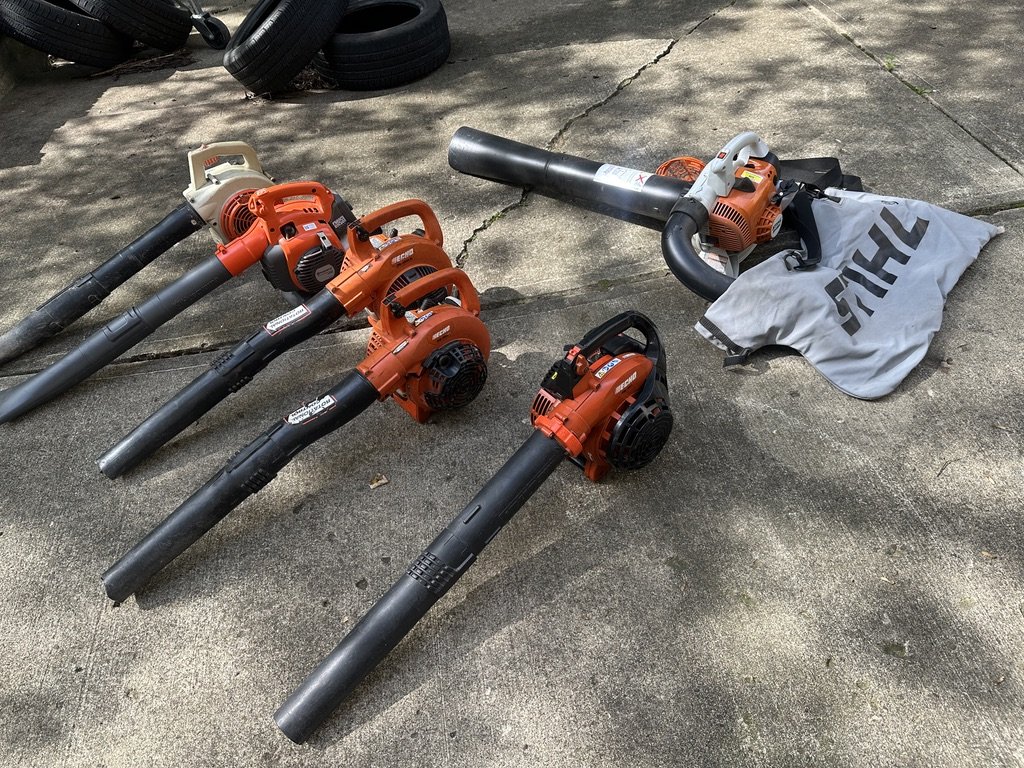
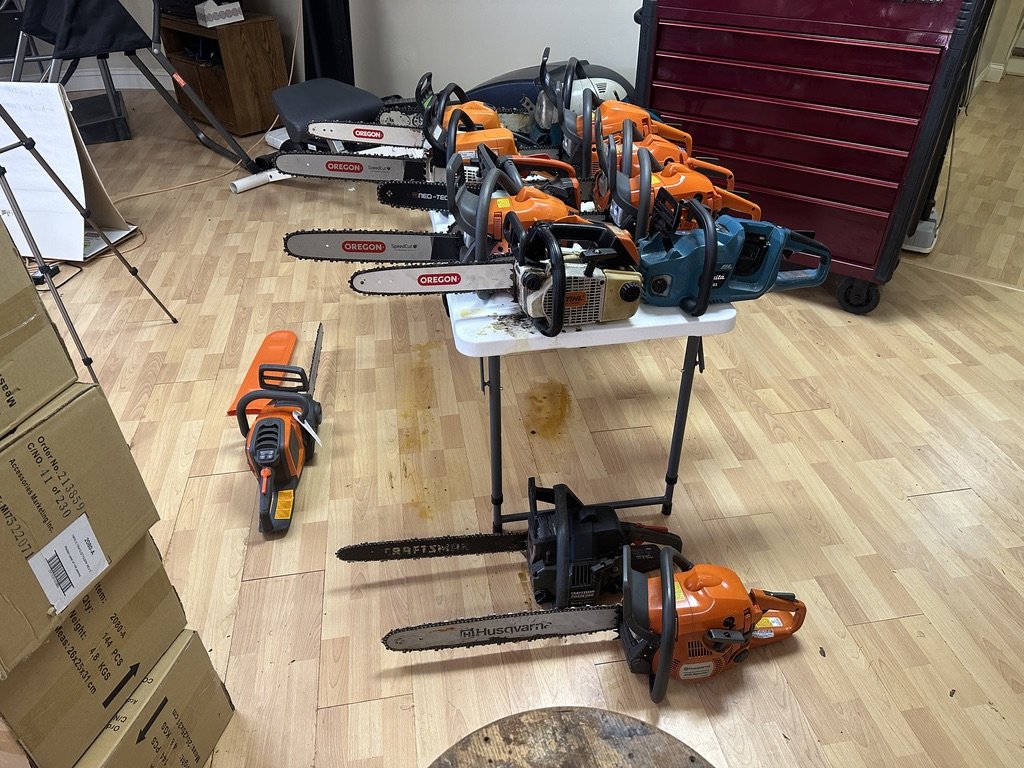
Then the guy with the first batch of tools called with another batch. Then another. Pretty soon I had a dozen chainsaws, seven or eight blowers, a few hedge trimmers, and a few weed whackers, some near new and some old.
What I learned
Two-stroke engines are relatively easy to fix. Most of mine took 30 minutes to an hour, and less than $20 in parts. Here’s the order I work in now:
- Fuel lines first. Ethanol in today’s gas hardens the lines until they split or break, and the machine won’t run. Changing them seemed really tricky at first. After a few, it’s not bad at all.
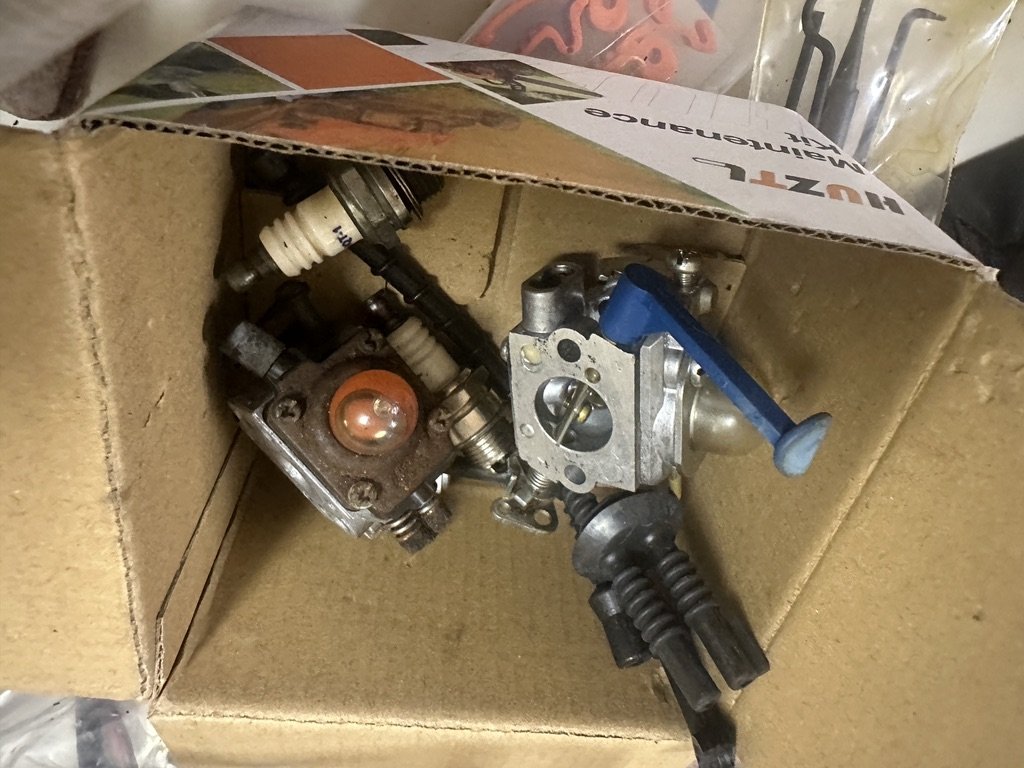
- Then the carburetor. Figure out how to get it off the machine, then take it completely apart. I clean every piece in my ultrasonic cleaner and put it back together, usually with a new fuel diaphragm.
- Start it and tune it. Once it’s reassembled, get it running and dial in the carb so it idles and revs cleanly.
- Know when to just buy a carb. Sometimes a new carburetor is cheaper and easier than rebuilding the old one.
When fuel and carb don’t do it, something else is wrong. I’ve chased a bad ignition coil, the occasional flywheel, and a few outright broken parts. But fuel lines and carbs cover the large majority.
The three that beat me (so far)
Out of all of it, only three machines have beaten me:
- An old Poulan saw. It was pretty far gone and not worth saving. I kept some parts and threw the rest out.
- A Stihl professional hedge shear. It had seen a lot of abuse.
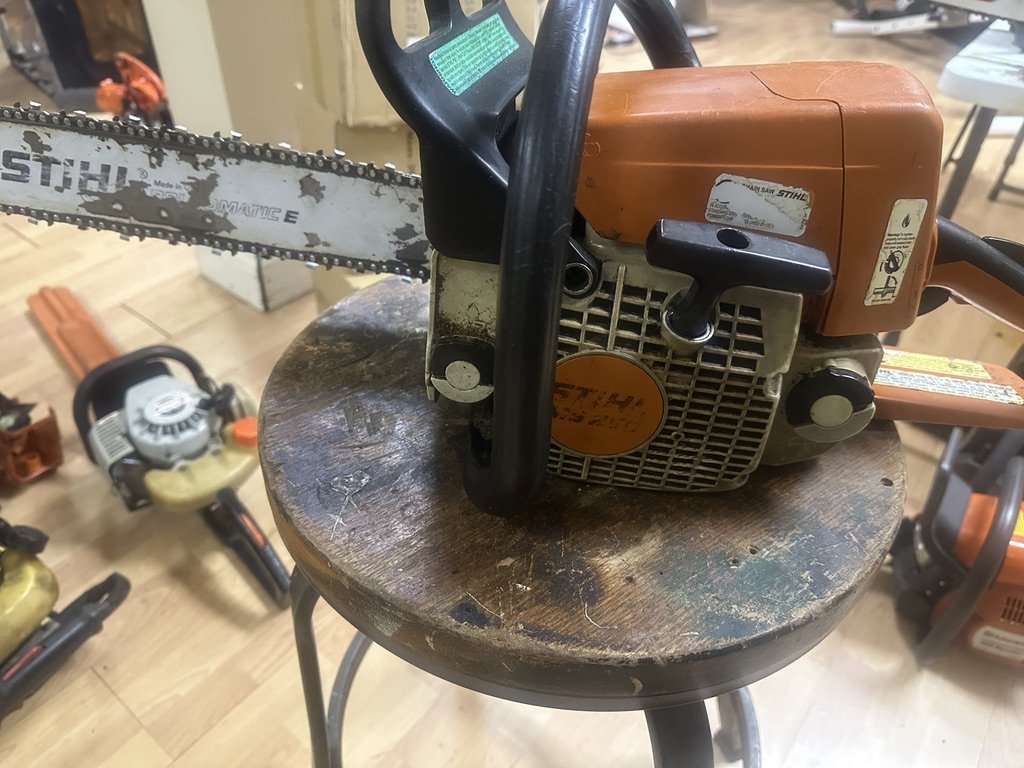
- The original MS250. I haven’t given up on it. I tried to fix it early on, before I knew much, and I’ve learned a lot since then. It’s going back on the bench.
Everything else got running eventually.
Advice on buying equipment
The only brands I’d buy are Husqvarna, Echo, Stihl, and Makita. Those machines are built to be serviced, and they’ll last a long time. A lot of people get roped into Poulan, Craftsman, and similar brands, but those don’t have the same level of parts support and aren’t built to the same standard.
If you’re shopping for your first chainsaw, I made a video that walks through it: Buying Your First Chainsaw.
Among the four, I do have opinions:
- Stihl is built well and has a lot of power, but in my experience it doesn’t start as easily as the others.
- Husqvarna starts easily and has power. Long-term reliability may not quite match Stihl, though I’ve had good luck with mine.
- Echo is the sleeper. Good stuff, easier to work on than the others, and it just runs.
- Makita built chainsaws for years through its Dolmar division in Germany. Sadly, from what I’ve heard, they’ve shut that down.
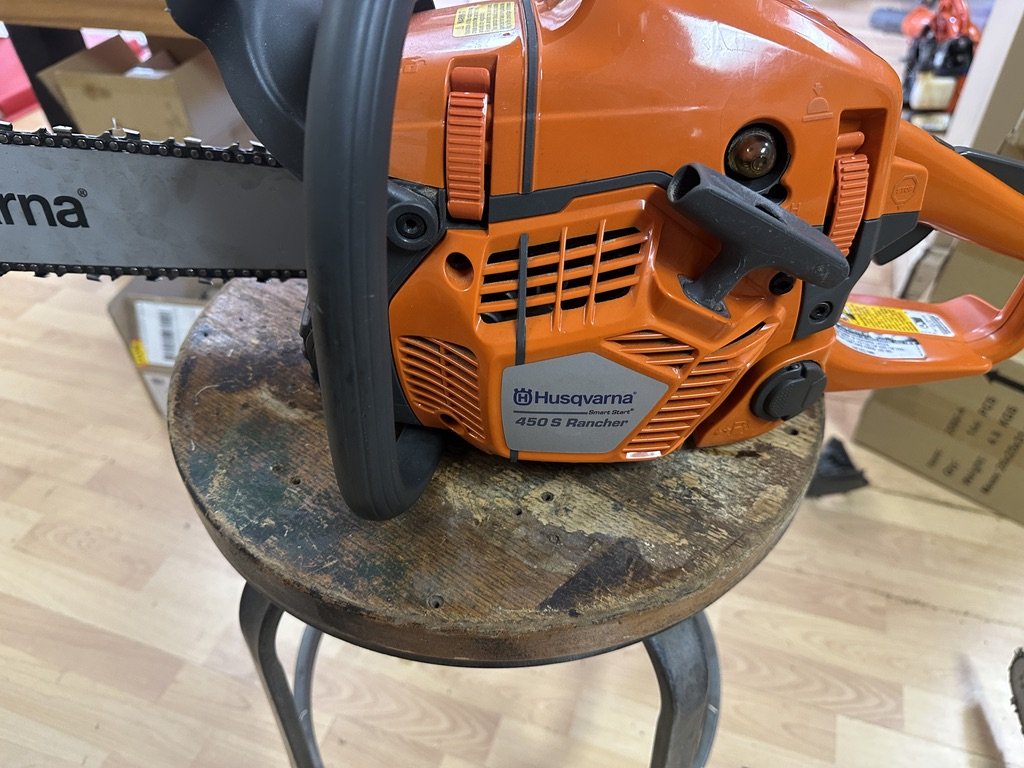
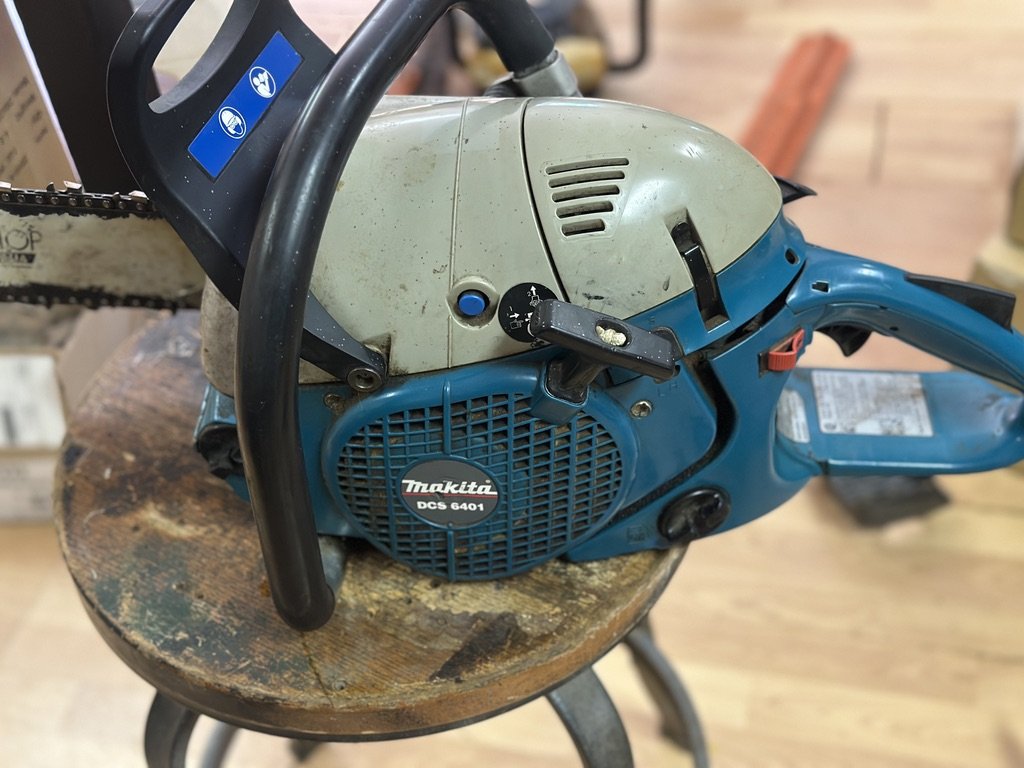
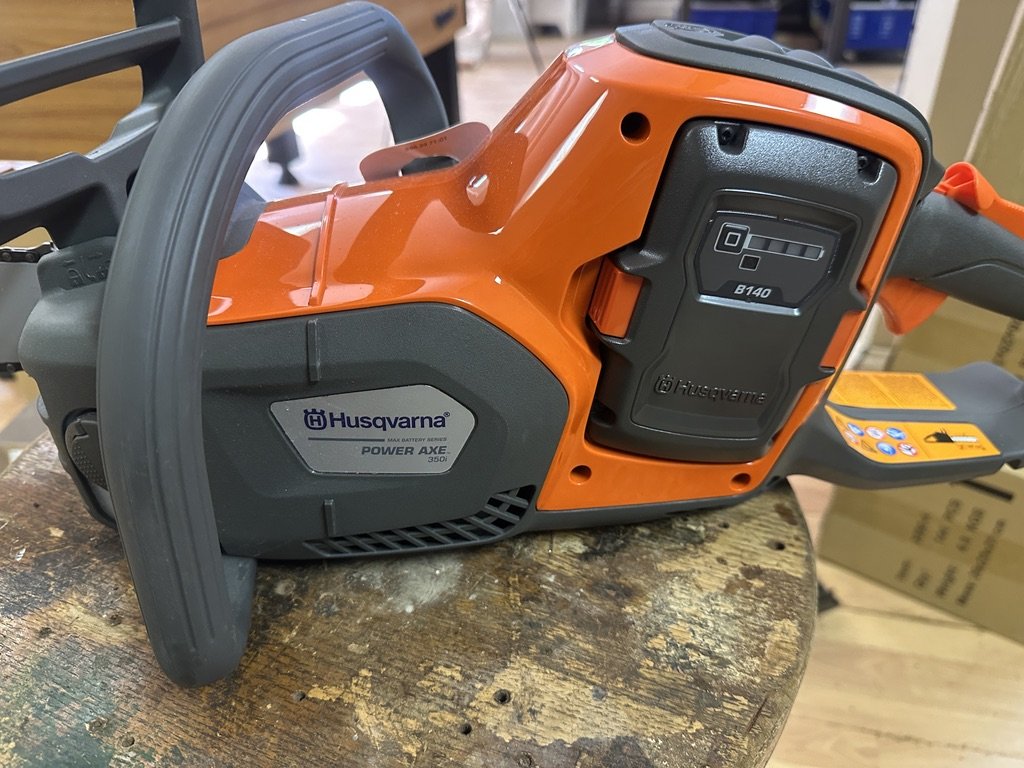
Battery equipment is coming on strong, and lots of companies make it. I’ve run Makita and Husqvarna battery tools and really like them. They’ll give gas equipment a run for its money. The catch is cost: battery tools cost more up front, and the long-term Achilles’ heel is the batteries themselves. They’re expensive, and eventually they wear out and need replacing.
Where it all ended up
As for the MS250 I wanted all along: I found a running one on Craigslist from another fixer. I see his listings all the time. He restores the really old stuff, Homelites, Craftsman, and Poulans, as a hobby. I doubt he gets his money out of them, but that’s not why he does it. His MS250 runs just fine, and I think I’m keeping it.
I’ve given a few machines away to friends and family. The rest I’m selling off on Craigslist, so if you need a good running saw, blower, or trimmer, you know where to find me.
If you’ve got a two-stroke sitting in the garage that won’t start, don’t throw it out. Start with the fuel lines and the carb. There’s a good chance that’s all it needs.