About five or six years ago, I came across an older Yamaha 36-volt electric golf cart for sale. The owner said it didn’t run and had no batteries. They had corroded, so he’d gotten rid of them. Otherwise the cart was in good shape. I didn’t know the first thing about golf carts, but I’d always wanted to work on one, and I figured they couldn’t be that complicated. I brought it home for $300.
A Farmer’s EZGO
The very next week, I spotted an EZGO Workhorse electric listed for $600. This one had newer batteries, but the seller, a farmer, said it didn’t work either. The cart had come out of a factory, which gave it to him when he retired. It was a little rougher than the Yamaha, and it was obvious they’d already tried to fix it. They let it go for $500. My thinking was that even if I couldn’t get the EZGO going, its batteries would get the Yamaha running and I’d get my money back.
I assumed the EZGO would be the hard one. The owner seemed competent, and if he couldn’t figure it out, I wasn’t sure I would. It turned out to be dirt simple. A small spring in the gas pedal switch had broken, so the cart never powered on. It took about ten minutes to find, and the replacement part cost $8. I felt a little bad about that, but I’d never worked on a golf cart before, so maybe I was just lucky.
I didn’t really have room for either cart, or much use for one. The EZGO needed a recovered seat and paint before I could sell it, while the Yamaha was ready to go and would sell faster. So I moved the EZGO’s batteries into the Yamaha. It still didn’t start. A couple of hours of troubleshooting turned up a broken wire, and once that was fixed, it ran perfectly.
I sold the Yamaha for $2,500 to a nice man who was having trouble getting around his neighborhood. That was a bargain for a working cart, especially one that nice. He was very nervous about the whole thing. I never got a call back, so I hope it worked well for him. At that point, I had less than $900 and a couple of hours invested, and I’d taken in $2,500.
Finishing the EZGO, and the Minister
Over the next couple of months, I finished the EZGO. I put in new batteries for $1,100. I considered lithium, but it wasn’t common back then. Today I’d go lithium without a second thought. I recovered the seat, painted the body (which, interestingly, was steel), and fixed the dump bed. Then I drove it around for a couple of months. It worked great, but I still didn’t have a real use for it.
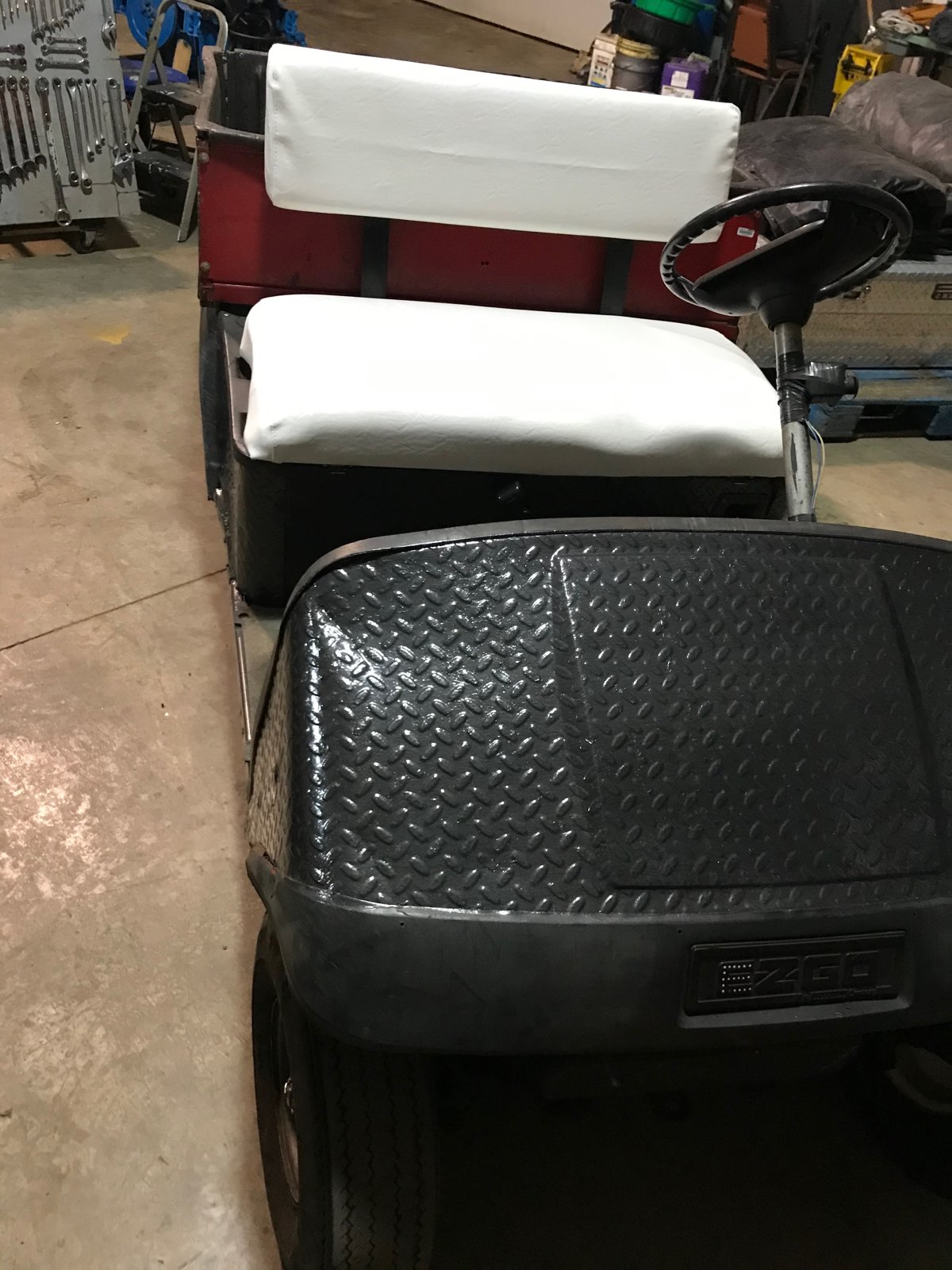
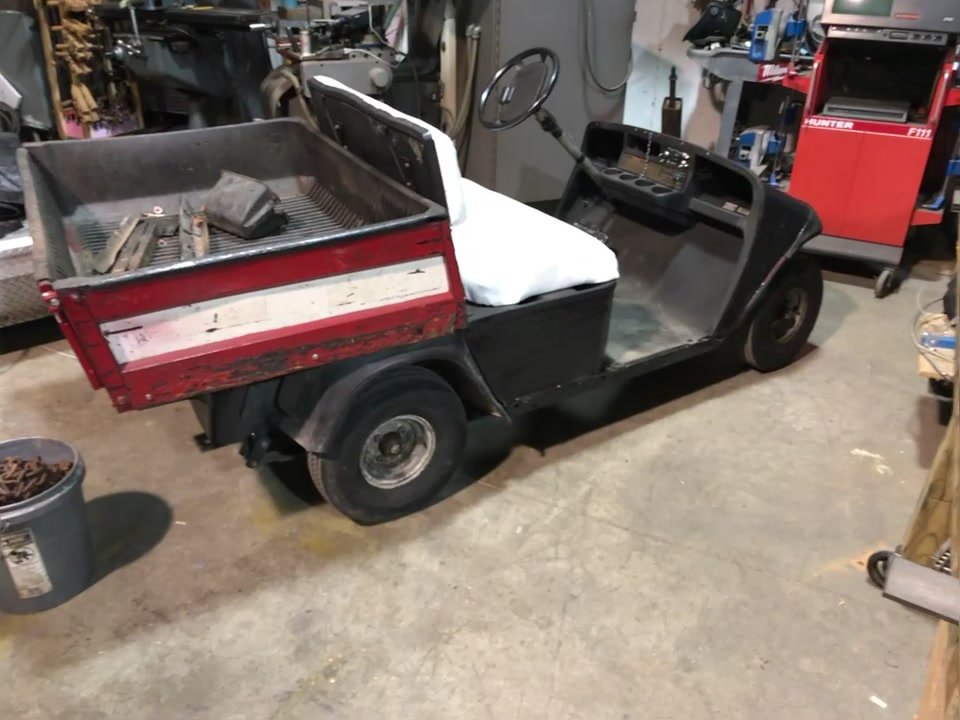
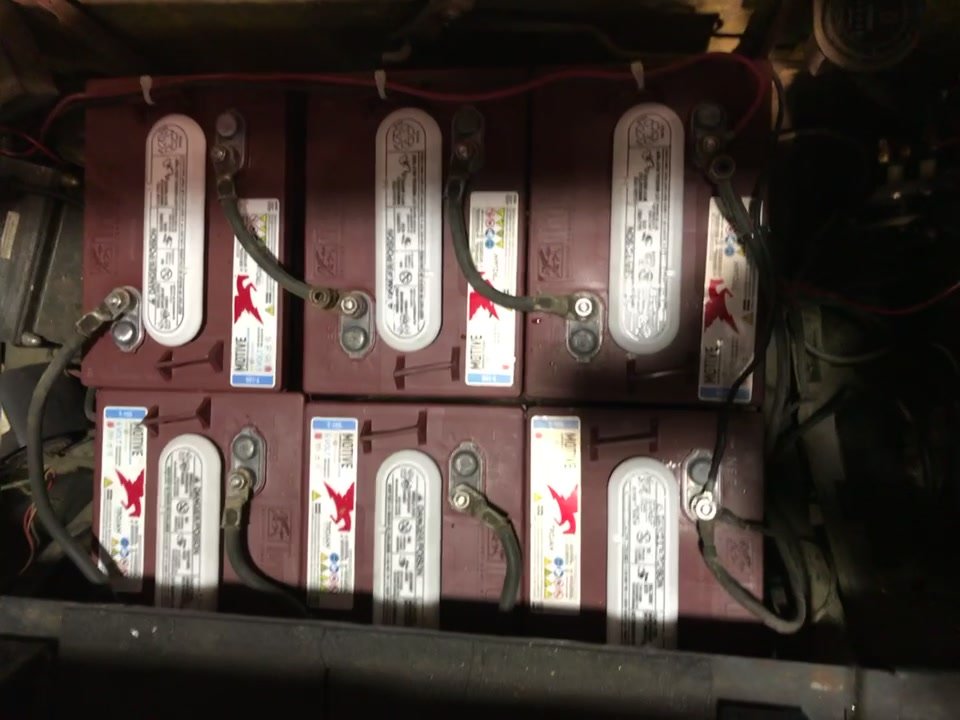
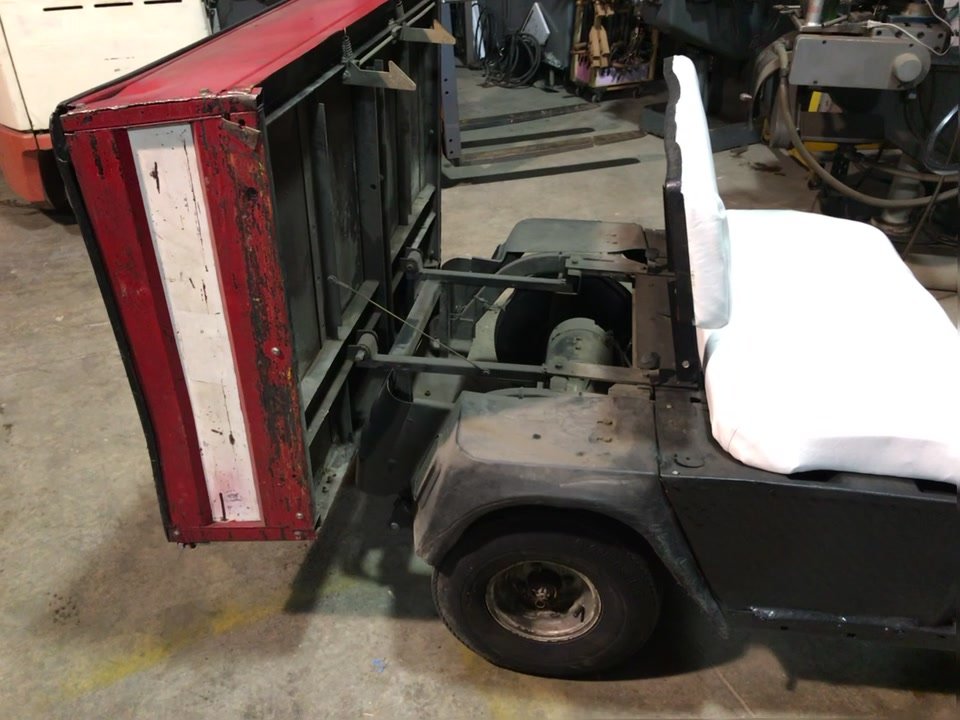
I listed it on Craigslist for $2,500, half expecting it to be a tough sell since it didn’t look nearly as nice as the Yamaha. Instead, the phone started ringing right away. My rule is that the first person to show up with cash gets it. The first caller told me he was a minister and wanted to see it that night. When someone opens with that, be prepared.
He showed up with his son, asked every question you can think of, and drove the cart for about 20 minutes. Then he came back and started negotiating hard. He’d only pay $1,800, and he reminded me again that he was a minister. I told him it was the first day it was listed and three other people were waiting to see it, but I’d let it go for $2,400. He offered $2,200. By then I was getting annoyed, so I told him that if he wanted to pay $2,200, he could wait until everyone else had looked, and if it was still available, it was his. He said OK, $2,400, but he needed until the weekend, about four days, to get the money. That meant telling everyone else to wait. I agreed, but told him there’d be no more delays.
He showed up a day late. He wanted to drive it again, for another 20 minutes, and then took one more shot at $2,200. When I didn’t budge, he handed me an envelope. I didn’t count it, and he drove off with the cart. The envelope had $2,200 in it.
I’ve done hundreds of Craigslist transactions, and that’s the only time I’ve been cheated. To be fair, I let it happen. I didn’t count the money. Even so, the two carts together cost me about $2,000, counting the $300 and $500 purchase prices, around $100 in parts, and $1,100 in batteries, and brought in $4,700. Not bad, minister and all.
The Club Car
Cart prices have climbed a lot since then. The $400 project carts seem to be gone, and nearly everything I see now is $3,500 and up. So this spring, when I was outfitting the condo in Bloomington and wanted a cart, I kept an eye on Christy’s auction. I found an older, plain-Jane two-seat Club Car electric with a charger, listed as running. I got bid up to $1,100.
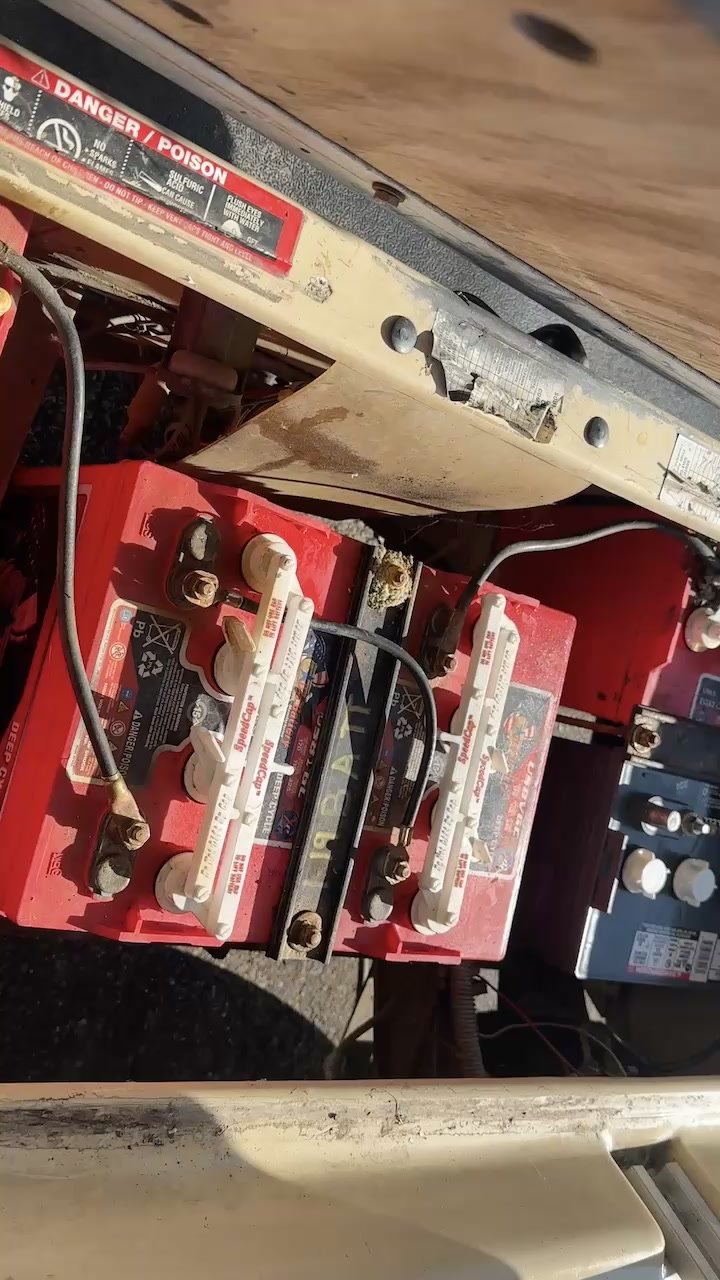
When I went to pick it up, it wouldn’t run. The batteries were dead. Back at the shop, I found they had no water in them at all. I filled them with distilled water, and the cart came back to life. I charged it, aired up the tires, and cleaned it up a bit, and it looked and drove the way an old cart should.
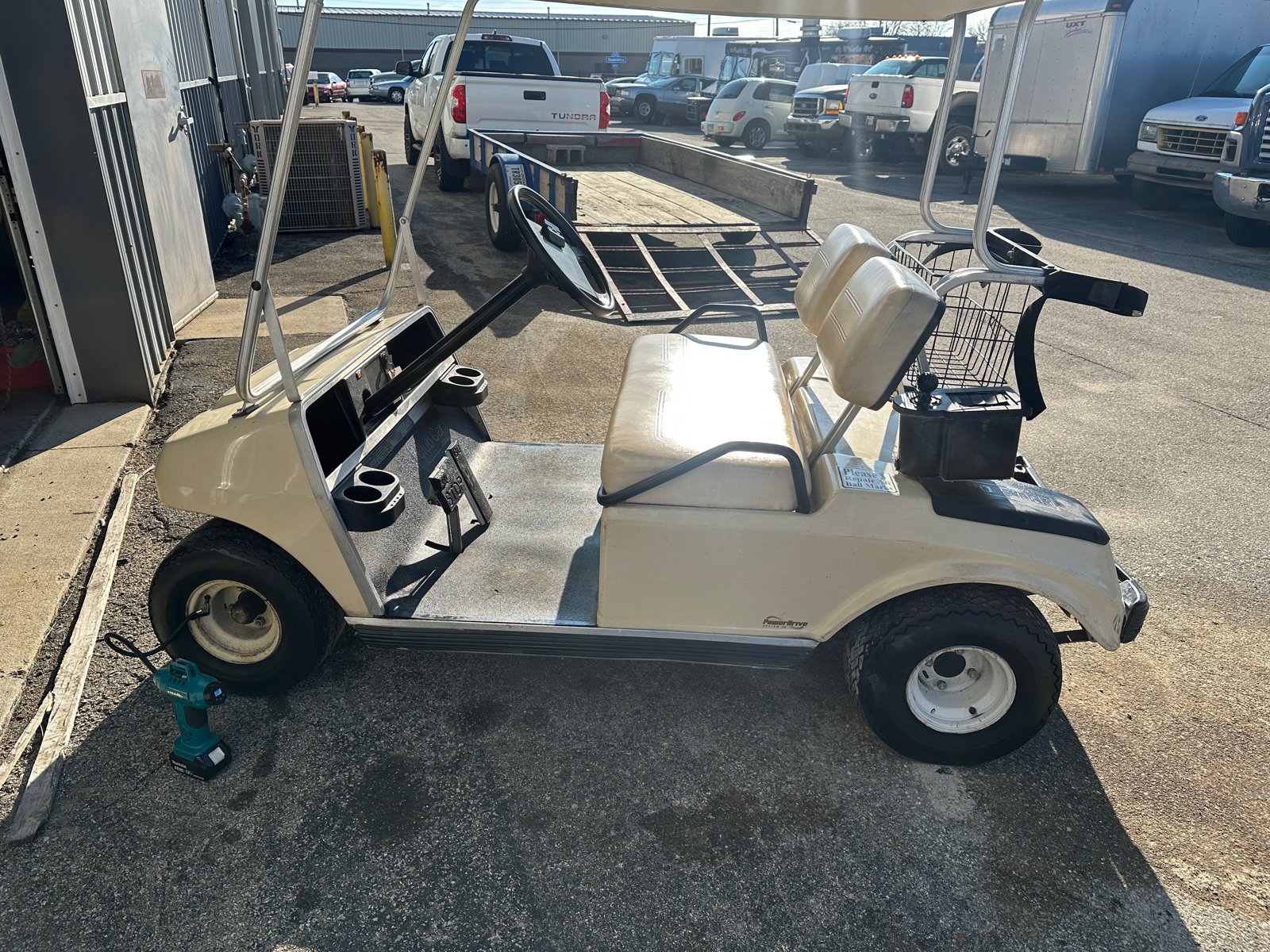
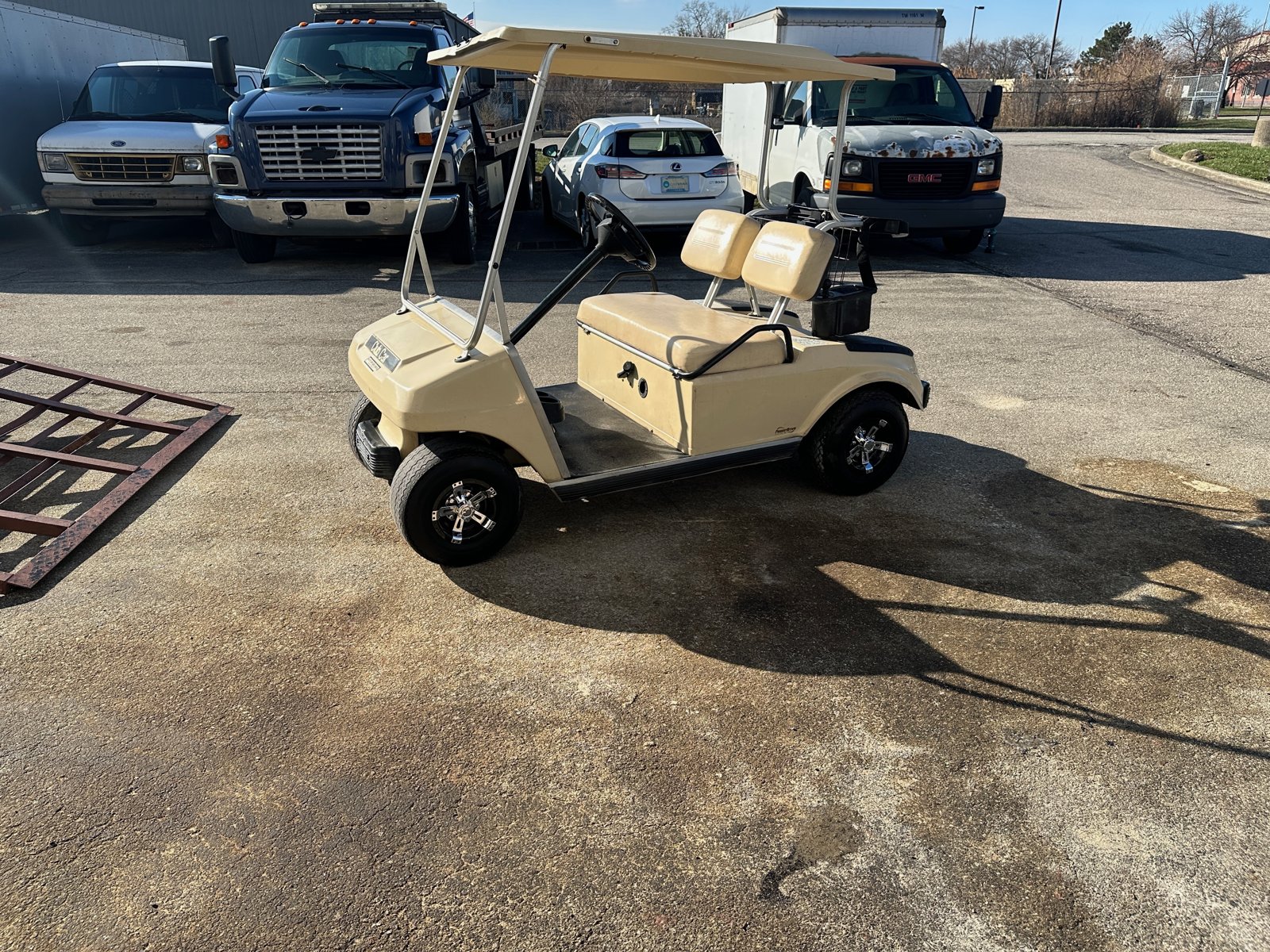
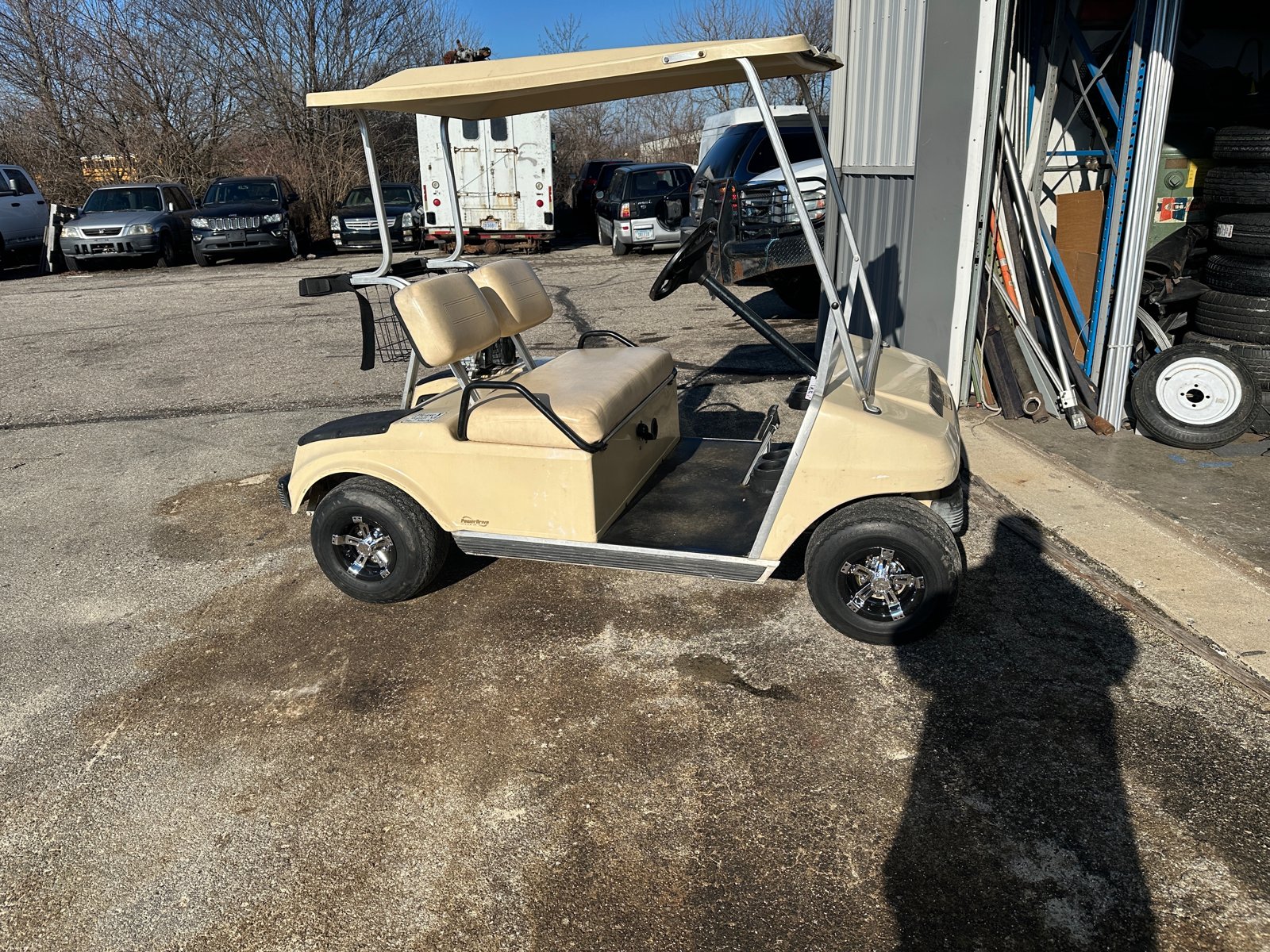
This isn’t the kind of cart I want to pour money into. People put lift kits, chrome wheels, and fancy seats on these things. I bought a set of chrome hubcaps on Amazon for $40, and they improved the looks a lot.
A Summer at the Lake
The Club Car has worked great at the condo all summer. The hills there are steep, and it isn’t fast on them, but it keeps going, and I get at least an hour or two on a charge. Between the move-in and the remodeling, we’ve generated mountains of trash, and the cart has hauled every bit of it to the dumpster. For $1,140 all-in, including the buyer’s premium and tax, it’s been another good deal.
I’ll probably add a flip seat on the back so it can carry more people, and I might keep an eye out for a nicer one someday. For now, it gets the job done.
Looking back, all three “dead” carts had simple problems: a broken spring, a broken wire, and batteries with no water. So check the simple stuff first. And count the money.