In 1989 Honda came out with a completely new concept in motorcycles. Called the PC800 or Pacific Coast, it was a motorcycle that didn’t look like any other motorcycle. It didn’t show off its engine or fancy wheels or chain drive – Everything was entirely covered in beautifully painted plastic.
Not only was the engine encased in plastic, underneath the plastic the engine was encased in heat reflecting and sound deadening foam. Which made it was almost – but not entirely silent. I say almost, because strangely and I think intentionally, at idle, the engine has the tiniest bit of vibration, but at speed the vibration goes away. The engine is water cooled and the air vents and foam covered engine keep all the heat away from the rider – an engineering feat by itself.
It had a flip up rear seat and a giant storage bin on either side of the rear wheel – a trunk – which can hold a bunch of stuff. Carrying stuff is sort of the Achilles heel of motorcycling. The Pacific Coast fixed it. It didn’t even advertise how big and powerful it was – it just said “Honda” on the side and on the rear “Pacific Coast”. It came in a cool two-tone pearl white. The Youtuber Fortnine from Vancouver made an excellent video about the Pacific Coast:
The motorcycle people hated them. “Too futuristic”. “Looks like a scooter”. “too slow”. It didn’t fit their paradigm. The futuristic thing was true – The Honda fits right in today as I write this in 2021, but in 1989, it looked like an alien spaceship.
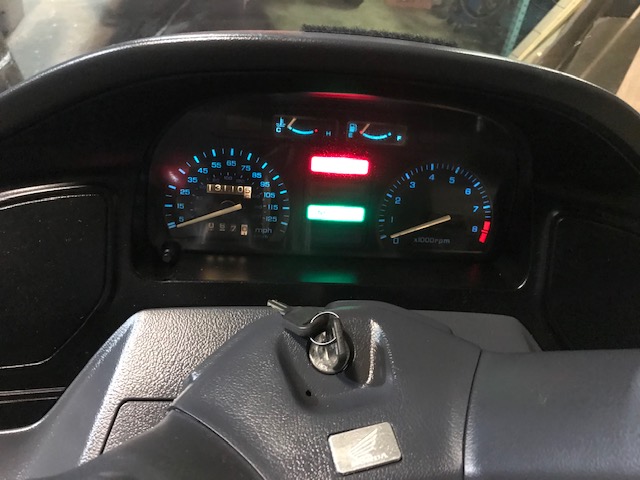
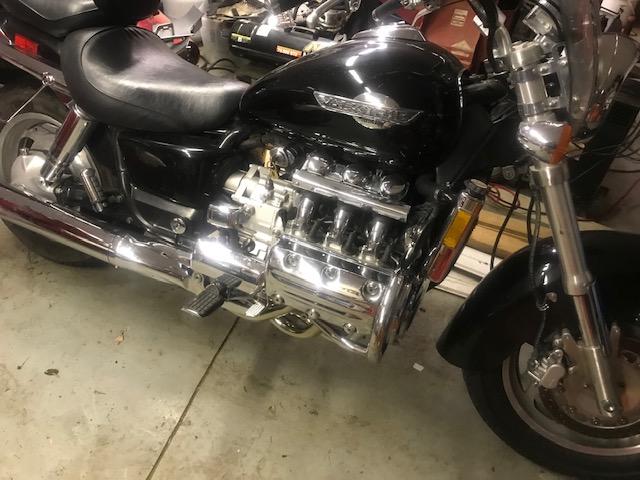
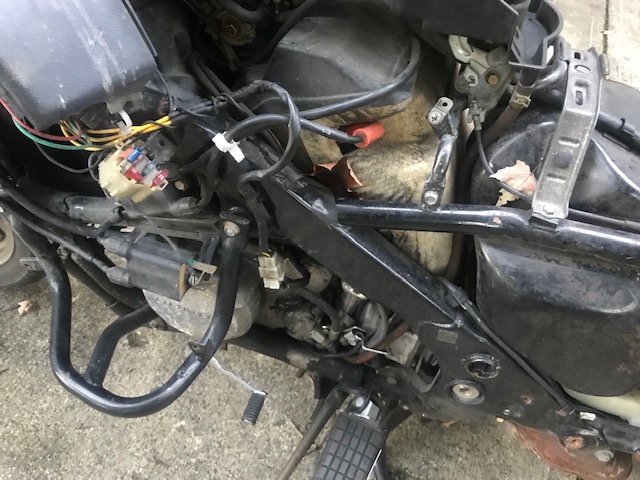
But those who bought them loved them. They raved about the convenience of the trunk, about the ease of riding, about how quiet and comfortable it was to ride. And the motorcycle is just about the most reliable and low maintenance motorcycle ever made. They routinely go 100,000 miles with nothing other than oil and tire changes. Unfortunately, the motorcycle pundits won. The Pacific Coast only lasted a couple years then got canceled, then came back for a few more years in some new colors, then got canceled again.
Me – I love motorcycles, but I had another motorcycle, and shortly after the original came out, two things happened. First, my brother had a bad motorcycle accident, and second we started having kids. Both of those put a damper on my motorcycling. I sold off my motorcycle and for about 7-8 years was a watcher, not a rider. And these were the peak years for the PC800. I remember seeing them around and thinking “that would be really practical”.
So a few weeks ago I was on Craigslist and there appeared an old Honda Pacific Coast – which had been in perfect condition, but had been in a minor accident. It needed some parts and some minor work to return to its glory and it was cheap. Exactly my kind of deal.
I went and got it from a very nice guy, about my age, who told me how nice it was before his unfortunate accident. I brought it home. Finally, I was going to get to ride a Pacific Coast.
It took me exactly 20 minutes to get it so I could ride it. The front fender was smashed, and the left mirror was smashed and some of the plastic was dinged up. A shame, because this low mileage bike was perfect.
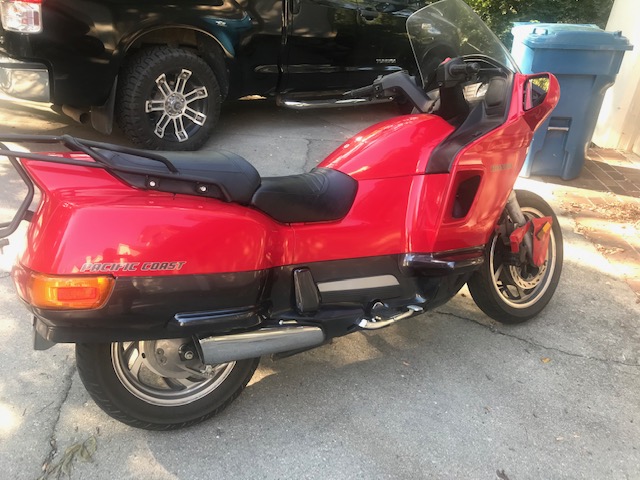
Anyway, I started riding it around while I ordered the fender parts and looked for a left mirror. I love the motorcycle. I should have bought one a long time ago. It rides the highway and carrys stuff like a Goldwing, but it is not as heavy.
A couple of misconceptions – first, even though people still have that “scooter” mindset, it’s not. It’s a big heavy motorcycle. It takes up a lot of space to park it. But once you are on it, it doesn’t feel heavy at all. It feels somewhat sporty?- well… not really. It handles somewhat sporty, but the engine is so quiet, you can’t hear it run. It also doesn’t have a ton of power, but enough – it will go 80-85mph on the highway easily, and it’s perfectly smooth doing it. And the trunk? Wonderful. I brought six bags of groceries and milk home the other day in it. It’s the perfect utility motorcycle.
So about that broken left mirror. The guy I bought it from told me it would be hard to find. At worst, I could maybe piece the old one back together. He was right – right hand mirrors are easy to find, but not left. The only mirror I could find was priced higher than I paid for the entire motorcycle!
But I found a parts motorcycle in Ohio, and in one of the pictures of parts that go with it – yes! a left hand mirror. Only problem was you had to buy the parts bike plus guy’s complete motorcycle – The one he bought the parts bike for – that apparently had needed a right-hand mirror. So off to Ohio I went, and I came home with two more Honda Pacific Coasts. (Side note: two Honda Pacific Coast motorcycles will fit in the back of a pickup, with about an inch to spare – it was a real trick to get them in there, and back out again)
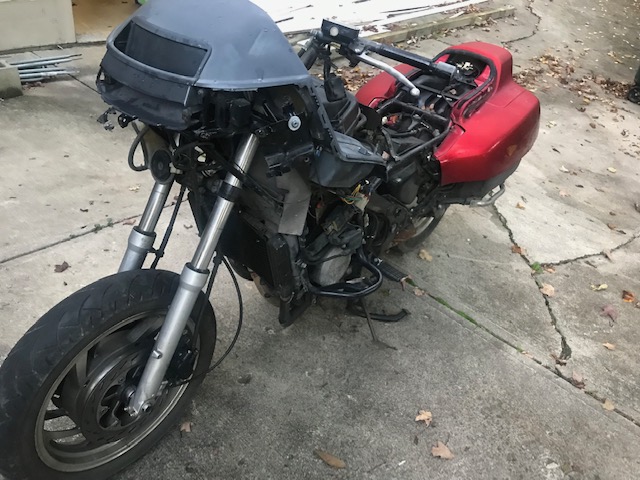
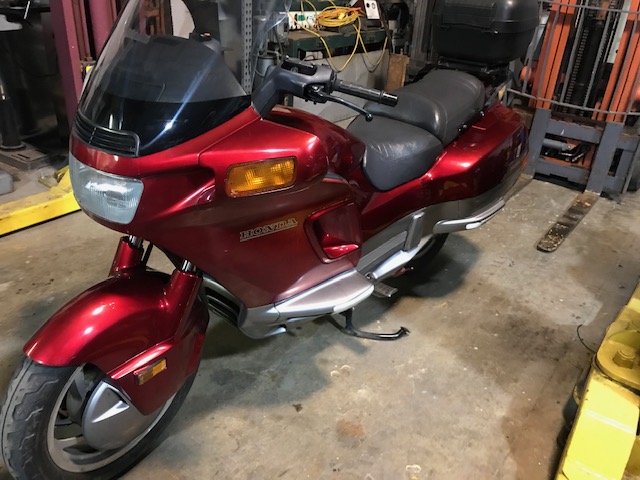
The other running one is almost as nice as the first one I bought – doesn’t run as well, but I’m thinking it just needs to be driven. It had a nicer windshield and a nice little trunk box on it. I’m taking the parts I want and building the ultimate bike and I will sell off the other one, and the parts bike to the next person who needs something. Actually I could probably get the parts bike running. Doesn’t look like it needs too much.
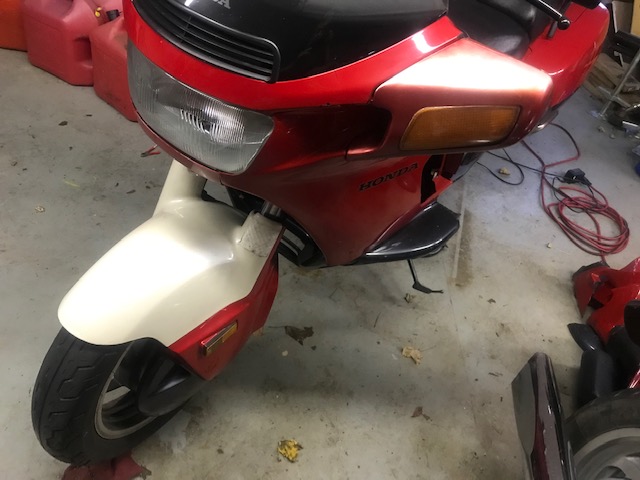
Sometimes fixing things is a strange path. You have an idea, and things just sort of multiply. I’m used to it. Happy riding.
Preserved conversation
Comments from the original site
Yes the Fortnine videos are amazingly well done. I was watching one a year or so back and he was riding around where there studio is and I realized it is in the industrial park between the hotel we stayed at in Vancouver and the shipyard. You I and Cassandra took a walk on the trail over that way when you were there – we had to have walked right past it. The motorcycles are pretty neat. The newer one runs slightly better and is better maintained, so I’m putting all the parts I like on it and going to sell the older one.
Enjoyed the read. I think I like the color scheme on the 1990 bike more than the 1996 but they both look great. The Fortnine video was exceptional by the way, I’m surprised I have not come across his work in the past.