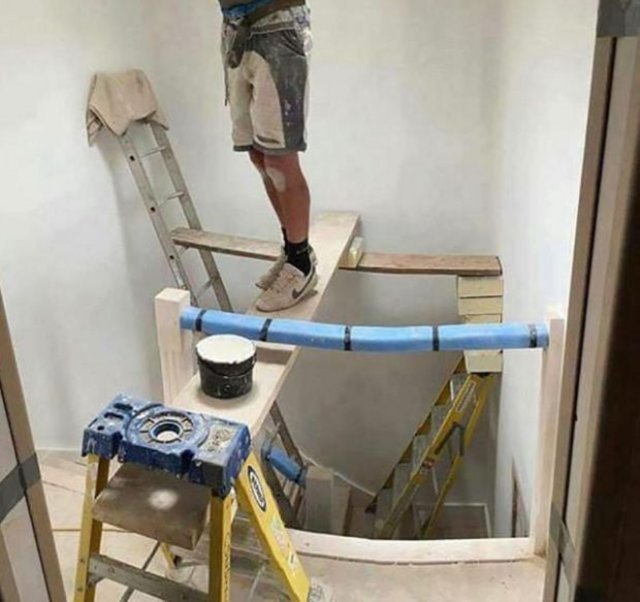
According to the ANSI Blog https://blog.ansi.org/?p=157287, There are more than 300 ladder-related deaths and over 130,000 emergency room visits related to ladders each year, as well as 2,000 ladder-related injuries every day. I heard elsewhere that a ladder is the most dangerous tool you can use. I personally haven’t had a major fall, but I have fallen off ladders and have had many near misses.
When I grew up there were two materials for ladders: Wood and aluminum. There were steel step stools, but anything more than a couple steps and steel was too heavy. Wood ladders had ruled the day for thousands of years and were still quite popular – nearly every household had a 5 or 6 foot wooden stepladder. Nearly all of them were an accident waiting to happen. They were rickety and the wood split. Most ladders that were more than a few years old had a split or a missing step on them. They were relatively lightweight, and cheap, but they left a lot to be desired.
Fortunately, not very many wooden ladders are sold in the United States today. Most ladders are made of aluminum or fiberglass. Both of those materials are lightweight and sturdy and they don’t split or crack like wooden ladders used to. Fiberglass has the added benefit of being electrically insulated, whereas aluminum conducts electricity well. This is an important consideration if you are ever working around electrical wires.
Ladder types:
So what types of ladders are available and what do you need: Like everything else, it depends. If you are an apartment dweller, or a condo owner, you might get by with a simple two or three-step step stool, something like this:
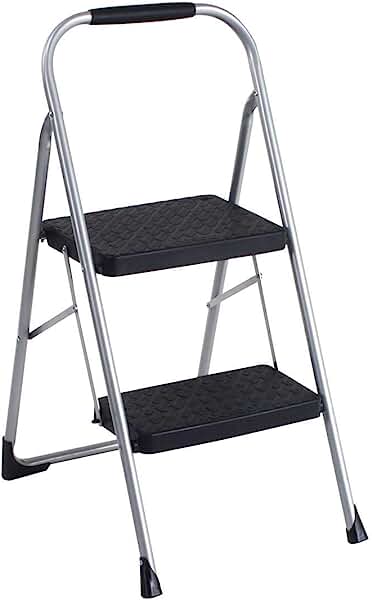
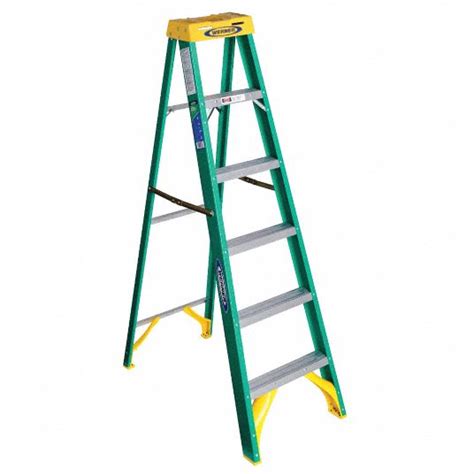
However, if you own a home, sooner or later, you are going to need something taller. Most homeowners have a small or medium stepladder.
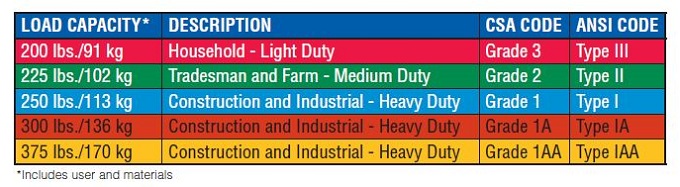
Another aspect is how much weight your ladder will hold. For this, ANSI has come up with a specification that various ladders have to be tested to. Ladders are rated from light duty to heavy duty. The heavier duty ladders are stronger, but also heavier, bulkier and more expensive.
However, even for homeowner use, I prefer the heavier ladders. You don’t need a 1AA for every job, but I do not like the lighter duty grades they are just too flimsy for me. I prefer to spend the extra money for 1A ladders
Reaching higher:
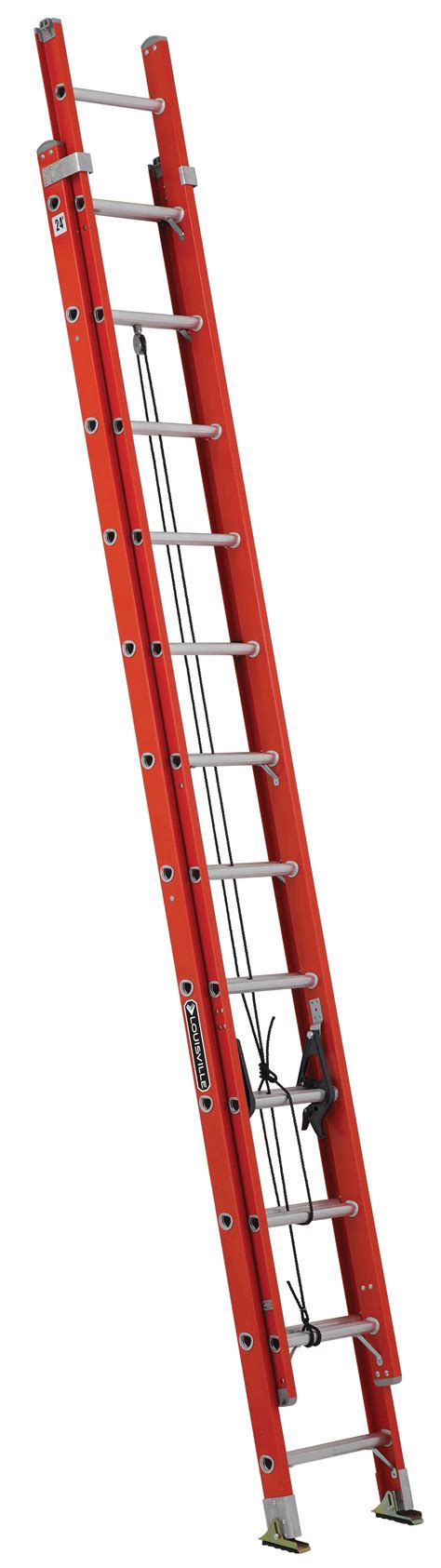
Sometimes you need something even taller – for that there are extension ladders – flat ladders with an extending section that can reach 16, 24, 32 even 40 feet high. They are very convenient for high reaching, but you have to pay attention to electrical hazards and the stability of the base. Using an extension ladder is mostly a two-person job.
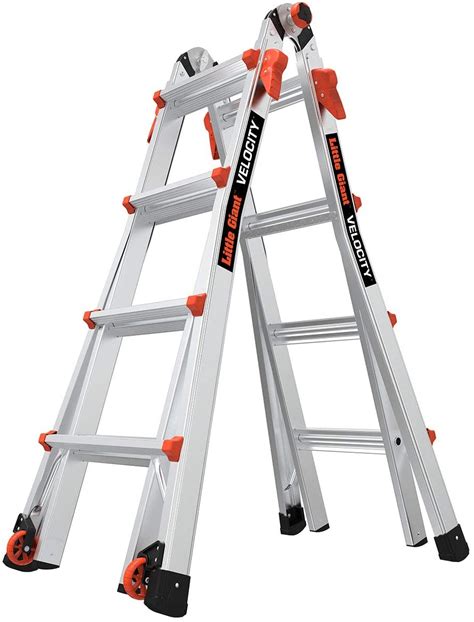
There is a specialty type of ladder which has characteristics of a stepladder and those of an extension ladder at the same time. The multiladder: A company called Little Giant created the market for this type ladder 30-40 years ago. The market evolved slowly, because the Little Giant product had a lot of flexibility, but the premium price turned a lot of potential customers off. Today, most companies produce a version of the multiladder, so Little Giant’s market share on this type has been slipping, but they’ve had to bring their prices down a bit to compete so they are more affordable. Little Giant still makes a premium product.
These ladders have a characteristic hinge in the middle that allows them to be locked straight, for use like an extension ladder or in a v shape for use as a stepladder. There are extensions on each end that allows them to be set at uneven heights, or extended fully for use as a very large stepladder. The extensions can even be separated from each other and the ladder can be used as a scaffold support, if desired.
When folded flat, with the extensions in, multi ladders are very compact for transport and storage. They come in different total lengths from 17 feet to 26 feet. I have a 17 foot Werner brand version of one of these and a 22 foot Little Giant. They have become my favorite ladders. The 22 foot Little Giant is probably the most stable ladder I’ve used, and also my favorite to use. The only downside to them is because they are so versatile and so strong, they can be heavy. The 26 foot Little Giant is probably too heavy for most homeowners to handle, my 22 foot is on the top end of my ability to use single handedly. And even though the prices of multiladders have come down, they are still quite expensive because they are relatively complex to make.
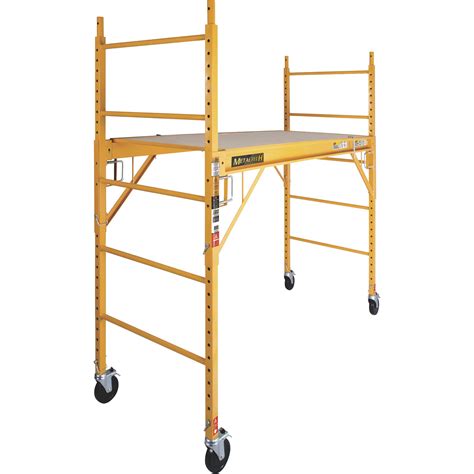
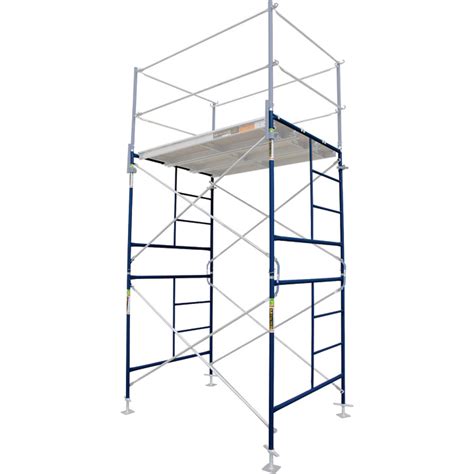
For larger, or longer term jobs, you might want to look into scaffolding. Scaffolding is still largely made of steel. There are two types you will likely encounter as a DIYer – “baker” platforms and “brickmason” scaffold. The baker units are light duty stacking platforms 6 feet high that are relatively inexpensive and portable in a van or pickup.
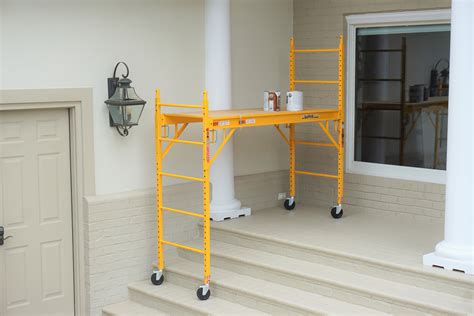
Masonry scaffold sections are approximately 5 feet high and 6 feet wide and are heavier duty and much more stable. They cost a bit more and are a bit more difficult to set up – especially at heights. Sections connect together and can be stacked very high vertically and very wide horizontally.
So what do you need? As I said above, if you live in an apartment a 2 or 3 step step is what you’ll need for changing a light bulb or repairing some drywall. I prefer the ones like are pictured above steel with wide steps and a hoop on top that allows you something to hold onto. They are easy to use, easy to store and easy to transport. I generally do not care for 2 step stepladders.
If you are a homeowner and do some, but minimal maintenance, then I would recommend a nice step stool, but I would add a sturdy 6 foot fiberglass ladder for everyday use. I would skip the homeowner grade ladder and probably opt for a grade 1 or 1A – and it will last you a very long time.
If you have a two story house, and/or you do a lot of projects, one of the more useful things you can buy is a multiladder. As I said earlier I really like my 22 foot Little Giant. It is equivalent to anything from a 5 foot to a 9 foot stepladder or a up to a 22 foot extension ladder, and it is very strong and stable. It’s a little heavy – if you don’t need that length the 17 foot is nice too. I have a similar Werner 17 foot multiladder and it is quite useful, although not quite as sturdy (or expensive) as the Little Giant. I looked at a 26 foot multiladder in the store, and my opinion was it’s too heavy for me to use without help.
Of course I’m a heavy duty DIY’er and I’m always doing projects that need ladders. I actually own multiple of every type ladder and scaffold listed here. My biggest recommendation would you use the right ladder for your job, choose a stable model of ladder and don’t be afraid to spend a decent amount of money on a ladder or platform. Spending money on a good ladder is like spending money on a motorcycle helmet no matter what you spend, it’s cheaper than a trip to the emergency room or worse. Stay safe.