When you fix things, you need tools. I have a lot of tools. Many of them are very useful, for a fairly specific thing and don’t get used often. Some of them get rarely used.
But a few of my tools stand out. They get used disproportionately. They are so useful, that I would say every fixer should have these tools:
Desktop tool:
- Computer – The ultimate fixit companion. You can learn how to fix most anything on the internet
Pocket tools:
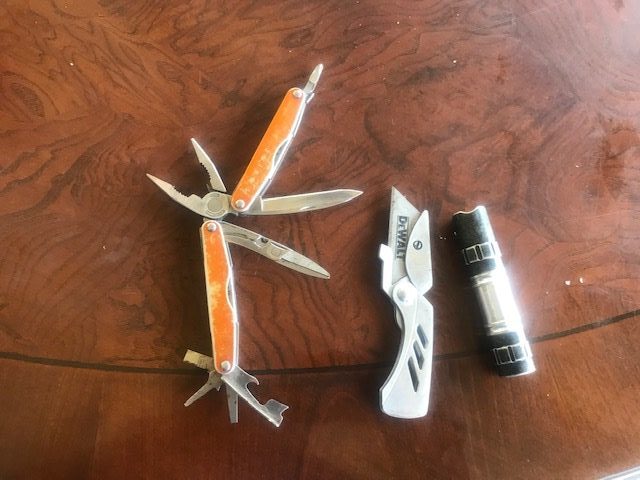
- Leatherman multitool – A toolkit in my pocket. I carry an old Leatherman model Juice S-2, but any good quality multitool with a good set of pliers will work. Don’t buy the cheap chinese one – it’s junk.
- Razor knife – Also in my pocket all the time. I carry a gerber EAB lite folding utility knife.
- Single AA LED flashlight – Yes, in my pocket.
Hand Tools:
- WD-40 – the ultimate hand tool. It will free up rusty hinges or shifting mechanisms and a million other things. There are other brands that work better for specific jobs, but the old tried and true WD40 is the most versatile. I have a big can in the shop and carry the little spray can in my tool bag.
- Hammer – I recommend three – Framing Hammer, Ball Pein Hammer and a 3-4 pound sledgehammer. I buy them at the pawn shop.
- Screwdrivers – A 5-6 piece set is good for starters. I like the foreign brands – Felo, Wera, Wiha, Vessel are all good. Cheap screwdrivers work, but wear out quickly.
- Wrenches – A couple of adjustable wrenches and a complete set of SAE and metric combination wrenches. Most any brand of wrenches work fine. I like to find older used high quality Adjustables.
- Pliers – Channel lock, Needle nose and diagonal cutters. Don’t buy cheap pliers. Channel Lock brand, Knipex, or Klein.
- Socket set – A small set of 1/4 inch sockets with SAE and Metric and a larger set of 3/8 inch sockets with SAE and Metric. Brand is not really important. I highly recommend socket sets that come in a plastic case – that way you can find what you need, and make sure all of them get put away. The case is maybe more important than the brand of socket.
- Hex key set in SAE and Metric – I like the ones in a folding set.
- Medical shears – These are very useful whenever you need to cut wire, or tape or even sheet aluminum.
- Putty knife – I use a couple sizes and also what they call a painter’s knife
- Paint Brush – Buy the good wooden handled ones and clean it well after use. They last a long time. 2 inch brush is the most versatile.
- Pry bar – I have everything from mechanics pry bars to 36 inch crowbars, but the most useful is the 12 inch “wonderbar” type
- Tape measure – My Milwaukee 16 foot is my most used.
- Safety Glasses – Always wear them when hammering or using a grinder. Also I use them in the yard when I weedeat or use a blower.
- First aid kit – I always have one nearby, just in case. Once in awhile I’ve needed it.
- Toolbox – People that don’t use tools say why do you need to have a big toolbox. Well I use my tools so much that I could not keep track of them – I have a box with a place for everything. If something is missing I can see in an instant. And I don’t have to go searching for my tools.
Cordless tools:
- Impact Driver and bit set – Not a drill, an impact driver is your first cordless tool, and may be the only one you need. It’s like a drill but it usually has a hex adaptor on it and it drives and removes screws and bolts. You’ll want an assortment of bits with it. Every cordless brand makes one and most all are good.
- LED light – The cordless LED lights are so good these days, that it can make projects much easier. Buy a light that uses the same batteries as your other cordless tools.
Corded tools:
- 4 1/2 inch angle grinder – This is a more advanced tool, and the most dangerous one on the list, but it is so versatile. You can cut metal, grind and wire brush with them.
- Drill and good drill bits – You can use a cordless drill, but you don’t need one. An old school corded drill is better. Buy one at a garage sale for $3 and save some money. A set of good drill bits is needed too. Spend $50 for a set in a small metal box. Cheap bits are useless.
- Reciprocating saw (Sawsall) – Another more advanced tool. If you are doing a lot of demolition work around the house or shop, these are invaluable. I buy them at the pawn shop.
- Circular saw – You need one for any construction job. I use my cordless more than corded, but when I have a big job, my corded skilsaw is the only thing that works.
- Shop Vac – I have a love/hate relationship with the shop vac. I love them when they are empty and have a clean filter, but they don’t stay that way very long. I have several, and I like the quieter ones.
Bench tools:
- Workbench – A good solid workbench is invaluable. Find a used one. I have an old counter that came out of an ice cream shop. The industrial ones with a metal or butcher block top are great.
- Bench Vise – Big old bench vises are much better than anything you can buy new. I do not like the swiveling kind they never stay put. Brands like Reed, Charles Parker, Wilton, Columbian, or Prentiss. Some of mine are 50 years old and will be around another 50 years.
- Bench Grinder – I like a good 6 inch bench grinder. I put a grinding wheel on one end and a wire wheel on the other.
- Jawhorse or Workmate – a portable workbench that can move outside. Lots of people like the workmate. I like the Jawhorse, I think it’s more versatile.
Other tools:
- Mechanic gloves – A nice set of gloves for moving things and keeping your hands safe.
- Propane torch – Maybe a little on the fringe of this set but this is so useful for many things. I use it to solder pipes together. To heat shrink electrical connections. To heat up stubborn bolts. To light fireworks. I like the bernsomatic push button style torch.
- Floor Jack – If you do any mechanic work you will need a jack. A nice 3 ton jack is so useful. The Harbor Freight Daytona jack is wonderful. I used my jack to lift a walkway that needed repair recently – not what it’s made for, but it works. I even carry a small one in my pickup and it has been used hundreds of times. The other day I changed a tire for a lady at the drug store – it took me five minutes.
- Jack Stands – If you are working under a car, you need jack stands. Don’t ever depend on only the jack to carry the weight of a vehicle if you are under it. I hear of people dying all the time when a jack failed and a car crushed them. I will use the jack only if I’m taking a wheel off and not getting under the car, but if I’m under there, jack stands are used.
- Multimeter – You need this to check electrical equipment. I use mine all the time. Wiring, batteries. Check switches. All kinds of things. It’s in my toolbag.
- Pressure washer – Maybe not the first tool you buy, but when you are a homeowner you need one of these. It can make something that looks dingy and clean it right up. I like the small gas ones, but electric works fine too. You could get by renting when you need it.
- Dremel tool and bits – Very useful for fine repair work. I like Dremel brand bits, but I don’t like their tools all that well. I prefer other brands.
- Ladder – A good, sturdy ladder is important to many jobs. A six foot fiberglass ladder will suffice in most situations. The ultimate ladder is one of those multi ladders. I have a 17 foot Werner multi- ladder and a 22 foot Little Giant, which is very nice, but very heavy and quite expensive.
OK, That’s a pretty big list. However, with this basic set of tools most homeowners can maintain their home. You can do basic and intermediate maintenance on your car as well as on your bicycle and your appliances. You can do basic wiring – and take apart and diagnose electronics.
You can buy that entire list of tools for 2-3 thousand dollars if you buy new, and probably 1/3 to 1/2 that if you buy used. How would you ever justify spending that kind of money? Well you could conceivably save several hundred or even several thousand dollars on one single repair. Recently the blower on my furnace went out. The furnace is 30 years old – yeah I know they don’t last that long do they? Well, of course they do, if you fix them – there’s nothing magic about a furnace
I’m sure a repairman would have charged $500 – 700 to replace the blower motor, but more likely he would have told me I need a new furnace for $5,000.
So what did it actually cost to fix the furnace? Twelve bucks. The blower motor had worn out the forward bearing. I ordered a package of 5 bronze motor bearings on Amazon for $11.70 and replaced the bearing myself using only tools from the list above. So I saved a minimum of $480 dollars on that single repair. I could have replaced the faulty motor with a new one for about $200 if I wanted to save some effort. In addition, I saved at least a motor, but maybe the furnace from the scrap bin.