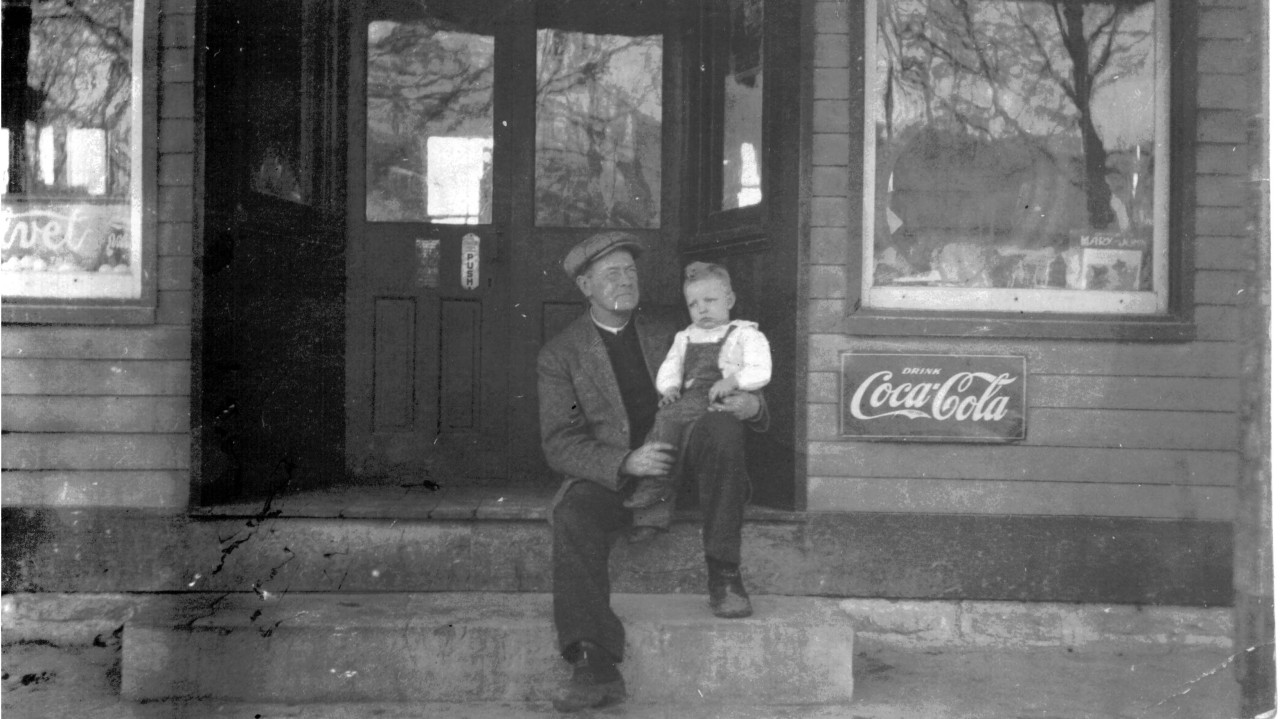
The year was 1900. Forty percent of Americans worked on farms. Today, barely 2% do. Yet we’re not starving—we’re thriving.
As headlines scream about AI displacing jobs, I’m reminded of a century ago when the world experienced its most dramatic economic transformation. Between 1900 and 1920, humanity witnessed the birth of the automobile, airplane, moving pictures, radio, refrigeration, the telephone, tractors, plastic, highways, stainless steel, electrification and central heating in homes. It was an era that fundamentally reshaped how we lived, worked, and thought about the future.
The Great Agricultural Exodus: A Historical Mirror
In 1900, four out of ten Americans toiled in fields from dawn to dusk. By 1920, that number had dropped to just 26%. The mechanization revolution—driven by tractors, harvesters, and new farming techniques—eliminated millions of agricultural jobs seemingly overnight.
Sound familiar?
Yet those displaced farmers didn’t face permanent unemployment. They became factory workers, salespeople, teachers, engineers, and inventors. They built the industrial economy that powered the 20th century. The jobs they found were less physically demanding, more intellectually stimulating, and offered greater diversity of opportunity than the backbreaking farm labor they left behind.
Today’s AI Disruption in Perspective
The current AI revolution mirrors this historical transformation with striking accuracy. Current data reveals:
- 14% of workers have already experienced some level of job displacement due to AI, suggesting the present impact remains measured
- Research shows up to 97 million new jobs will emerge in the US due to technology advancements, particularly in AI development, data analysis, and digital services
The Jobs AI is Creating Right Now
Just as the 1900-1920 revolution birthed entirely new professions—automotive and aircraft mechanics, radio operators, radio and film directors—AI is generating roles that didn’t exist five years ago:
AI Trainers and Developers: AI and machine learning specialists show 39% potential job growth in the coming five years.
Prompt Engineers: Specialists who optimize AI interactions, ensuring systems produce desired outputs across industries.
AI Ethics Specialists: Professionals who ensure AI systems are fair and aligned with human values, working throughout development lifecycles.
Data Scientists and Analysts: With salaries ranging from $110,000-$170,000 annually, these roles help businesses derive insights from vast data streams.
Smart Technology Designers: From smart homes to autonomous systems, these professionals integrate AI into our daily environments.
The Quality Revolution: Better Work, Not Just Different Work
Here’s what the doomsayers miss: the jobs being created aren’t just numerous—they’re better. Just as moving from farm labor to factory work and professional services improved working conditions in the early 1900s, AI is pushing us toward more fulfilling careers.
The shift is already evident:
- Less repetitive, manual labor
- More creative and strategic thinking
- Greater flexibility and remote work options
- Higher skill requirements leading to better compensation
- Increased focus on human-centric skills like emotional intelligence and creativity
According to multiple industry research reports, AI will create millions of new jobs by 2026, particularly in data analysis, software development, and cybersecurity.
Learning from History’s Playbook
The agricultural transformation teaches us three crucial lessons for navigating the AI revolution:
1. Adaptation is Everything Farmers who learned new skills thrived in the industrial economy. Today’s workers who embrace AI tools and develop complementary skills will lead tomorrow’s workforce.
2. Government and Business Must Partner The early 1900s saw unprecedented cooperation between educational institutions, government, and industry to retrain workers. We need similar collaboration today.
3. The Transition Takes Time The agricultural shift occurred over decades, not months. McKinsey estimates that 375 million workers globally may need to switch occupational categories by 2030, but this transition will be gradual.
The Bottom Line: Embrace the Wave
Those who thrived during the 1900-1920 transformation weren’t the ones who tried to stop progress—they were the ones who learned to ride it.
Rather than eliminating entry-level opportunities altogether, companies could harness AI to train the next generation of senior professionals. The key is proactive adaptation.
My advice? Start learning AI tools today. Take online courses. Understand how AI can enhance your current role rather than replace it. 96% of companies planning to use AI state that having AI skills will be beneficial for candidates.
History shows us that technological revolutions don’t eliminate human work—they elevate it. The farmers of 1900 couldn’t imagine becoming software engineers, data scientists, or AI ethicists. But their descendants are doing exactly that.
The question isn’t whether AI will change the job market. It’s whether you’ll be ready to seize the opportunities it creates.
What’s your take? Are you seeing AI create new opportunities in your industry? Share your experiences in the comments below.
Originally published on LinkedIn on July 11, 2025.
One Year Later: From AI Tools to AI Agents
October 2026
When I wrote this article, I was mostly thinking about AI as a tool: something that could help a person write an email, analyze a spreadsheet, create an image, or produce a first draft. That is still happening, but the most important development since then is agentic AI. AI is beginning to carry an idea through an entire workflow rather than simply helping with one task inside it.
From tasks to workflows
This website is proof. There is no way I could personally create a website like this without agentic AI. I am using an OpenClaw agent to help edit and organize the writing, document the sources, create the pages, manage the software-development process, test the results, and publish the finished site. I am not versed in doing all of that. With the agent, I feel perhaps 100 times more productive.
Without it, this website would document only a tiny fraction of my ideas, projects, and experiences. With it, I feel as if I have a reasonable chance of preserving a good percentage of them.
That is different from asking a chatbot a question. I can describe the outcome I want, review what it produces, correct it, and have the system carry the work across several specialized steps. Anthropic’s usage research still finds more collaboration than full automation in interactive AI use, but it also found a strong increase in directive conversations where a user hands the system a task and expects it to return the result. That is the direction I see firsthand.
The apprenticeship problem cuts both ways
Entry-level employees have traditionally learned by doing routine work under experienced people. If AI performs that work, where do future senior people acquire judgment?
When I started in consulting, I might spend days or weeks creating a draft presentation, then days or weeks more polishing it and making it presentable. Today I can give AI four old presentations and say: take this idea, use this format, add these ten things, and write it for this customer at this company. A credible draft appears in ten minutes. That is incredible. It used to take weeks, and I no longer need a junior consultant to assemble that first draft for me.
I still need enough experience to spot the bad ideas, missing logic, false confidence, and holes in the argument. But a savvy junior consultant using AI may get 98% of the way there—and possibly go well beyond what a junior person could have done before—without having my 40 years of experience.
That cuts both ways. AI may let an inexperienced person learn faster and contribute much sooner. It may also let someone produce work that looks expert until it is time to check the logic, defend it in front of a customer, handle an unusual case, or accept responsibility for the result. Then the experience gap becomes visible again.
I do not know where that lands. Companies cannot simply eliminate the bottom rung and assume senior judgment will somehow regenerate itself. They will need to redesign apprenticeship so younger people learn by directing, checking, and improving AI-supported work—not merely accepting polished output. What I am confident about is that people who embrace the technology will leap forward, and those who reject it will fall back.
Jobs are bundles of tasks—and employers will fill the space
Most jobs are not one activity. They are bundles of tasks, some easy to automate and others dependent on context, intuition, trust, physical presence, or judgment. The International Labour Organization now estimates that one in four workers worldwide is in an occupation with some exposure to generative AI, while concluding that transformation is more likely than outright redundancy because human input remains necessary.
I think employers will immediately want much more output from every employee. There is precedent for that.
In the 1980s, we imagined the paperless office. I started my career with stacks of paper on every desk. You had an inbox, an outbox, and a filing cabinet to store your work. The paperless office really did make handling information easier—but nobody used the saved time to reduce the workload. They piled ten times more work onto each person. Then, you worked on one or two things at a time. Now you work on 40. For someone like me, it is crazy. It is hard to focus.
AI may accelerate that pattern. If it makes an employee three times as productive, many employers will ask for three times the output rather than a shorter workweek. Human input will remain necessary to guide the ideas, add intuition, recognize nonsense, correct errors, and decide what is worth doing. The danger is that AI removes the mechanical burden only for organizations to replace it with a larger cognitive burden.
The transition will not be smooth for everyone
The agricultural analogy is still useful, but it should not romanticize the transition. Displaced farmers did not effortlessly become engineers. Mechanization and rural displacement were part of a much larger economic upheaval. The Great Depression had many causes, and I would not claim workforce displacement caused it, but the human disruption was real.
People lost farms and towns failed. Some moved west looking for work. Some became migrant laborers, panhandled, rode freight trains, or survived through public work programs such as the Civilian Conservation Corps and Works Progress Administration. Others made smoother transitions and became electricians, heating and air-conditioning technicians, automotive workers, mechanics, and highway engineers—like my grandfather in the photograph above.
The interesting question is what separated the smooth transitions from the disastrous ones. My guess is some combination of adaptability, access to training, willingness and ability to move, transferable skills, useful personal networks, and recognizing the new opportunity early enough to act on it. Those same characteristics are likely to matter now. Unfortunately, not everyone starts with equal access to them.
“Society eventually creates better work” is not the same as saying every displaced worker lands safely. The long-term outcome can be positive while the transition is brutal for particular people, families, towns, and industries.
The people who succeed will be the ones who do it
Base44, an AI application builder, runs advertisements with a message along the lines of, “If you can dream it, you can build it.” That is increasingly true. You can now describe an application in plain English and have AI produce something that would once have required a software team.
But the people who succeed will not simply be the ones who can build something. Nearly everyone will have that capability. The successful ones will be the people who actually build something, put it into use, discover what is wrong with it, improve it, and then do it again. And again. They will create agentic workflows, test them on real projects, refine them, discard the ones that do not work, and turn the successful ones into systems.
We have seen this pattern before. YouTube eventually gave almost everyone the ability to publish video to the world. Most people watched videos. Some posted a few funny clips. A much smaller group learned the medium through repetition and built something substantial.
Luke Nichols is one of the clearest examples. He began making fishing and outdoor videos for fun, long before anyone could know where it would lead. He learned how to film, tell a story, create a title and thumbnail, hold an audience, and repeat the process. By the time he stepped away from regular publishing in May 2025, he had made more than 1,000 videos across his channels, and Outdoor Boys had grown beyond 15 million subscribers.
Luke was not an average person who happened to upload often. He had already been a successful attorney. He is intelligent, determined, willing to endure brutal conditions to finish what he starts, and he developed an exceptional intuition for what an audience would value. Plenty of people work hard without building an audience of 15 million. Repetition was necessary, but it worked because it was guided by judgment, skill, feedback, timing, and surely some luck.
You could practically watch the family’s finances and opportunities change as the audience grew. But you could also see the cost of sustaining that production. Luke said the channel’s success had begun to affect him and his family, and he wanted to spend more time with them. Then he stopped—almost cold turkey—while the channel was still growing.
His success did not come merely from having access to YouTube. Billions of people had the same access. It came from making the videos, learning from them, developing a repeatable system, and doing it more than a thousand times. His decision to stop is also part of the lesson: leverage can create extraordinary results, but a system that consumes the person operating it is not a complete success.
Agentic AI will follow the same pattern. Most people will use AI occasionally to make existing activities easier. All of that is useful. A smaller group will reorganize how they work around it. They will apply AI to consequential work, repeatedly. They will build judgment about where it succeeds, where it lies, where it breaks, and where a human still matters. They will create workflows that compound rather than isolated demonstrations that are forgotten the next day.
The scarce resource will not be access to AI. It will be the initiative to put it to work, the discipline to keep improving it, and the judgment to aim it at something worthwhile.
The verification bottleneck
There is another side to 100-times productivity: we may produce 100 times as much material and discover that most of it is crap.
I already see people find numbers to justify a position rather than test the numbers to learn whether the position is sound. AI can help with either approach. It can challenge an argument, test assumptions, and find contrary evidence. It can also manufacture a polished case for almost anything. The user must understand logic and statistics—and be willing to discover that the original idea was wrong—to know the difference.
As producing work becomes easier, checking it becomes more important. Sources, tests, review points, explicit assumptions, and accountable human judgment are not administrative overhead; they are part of the product. The workflow behind this website includes drafts, branches, previews, link checks, and review before publication. That may sound elaborate for a personal website, but it is how I keep increased output from simply becoming increased noise.
Who captures the productivity gain?
Companies are already thinking about how they can capture AI’s value. I have a strong opinion about what they should do with it.
This is a once-in-a-generation opportunity for companies to leapfrog competitors and create tremendous value. They have the ability to do more with less than they have had in a long time. If executives were careful and ambitious, they would be creating a list of everything that could rocket their company forward—the products they never had time to develop, neglected customers, broken internal systems, deferred research, undocumented knowledge, and opportunities that always lost the budget fight. Then they would use AI and their newly available workforce to attack that list.
I do not think most companies are doing that. The unimaginative response is to use AI only to cut headcount and make the remaining people carry more work. The better response is to redeploy the productivity gain into projects that were previously impossible or uneconomic. That is what I would advise as a business consultant: do not merely remove labor from the old machine. Use the new capacity to build a better machine—and several new ones.
The questions I cannot answer yet
The internet once seemed likely to let people organize themselves around projects: find one another, combine specialized skills, build a product, and then form a different team for the next idea. It happened, but much less than I expected. Most of us still depend on large, durable organizations for customers, capital, distribution, reputation, benefits, and protection from risk.
Agentic AI may shift that balance. One person or a small temporary team can increasingly draw on capabilities that once required whole departments. Will that create a larger economy of independent specialists and companies that form around an idea and dissolve when the work is done? Or will control of the models, capital, customer relationships, and distribution make the largest organizations even more powerful?
I also wonder:
- When polished output becomes abundant, do judgment, verification, trust, and responsibility become the genuinely scarce skills?
- Can AI become a real apprenticeship—helping inexperienced people acquire expert reasoning—or will it merely help them imitate its appearance?
- How do we build systems that multiply a person’s effectiveness without eventually consuming the person operating them?
I have opinions, but not answers. Those questions may determine whether this transition resembles the best or the worst parts of the last one.
The bottom line, one year later
AI is not merely learning to perform individual tasks. It is beginning to perform whole workflows. That makes the transition faster and raises a new problem: not just which jobs survive, but how people learn judgment when machines do the beginner work.
I remain optimistic. The technology gives one person the leverage of a team and gives a small company capabilities that once belonged only to a large one. But optimism about the destination is not an excuse to ignore the disruption along the road. The winners will not simply be the companies that eliminate the most jobs. They will be the people and companies that use their new capacity to do important things they could never do before.
That is what I am trying to do here.
Sources: Anthropic Economic Index, January 2026, the International Labour Organization’s 2025 update on generative AI and jobs, Base44, and Luke Nichols’s “Goodbye” video.